Your Finnish Writing Is 95% Correct. Here's How to Find the Critical 5%.
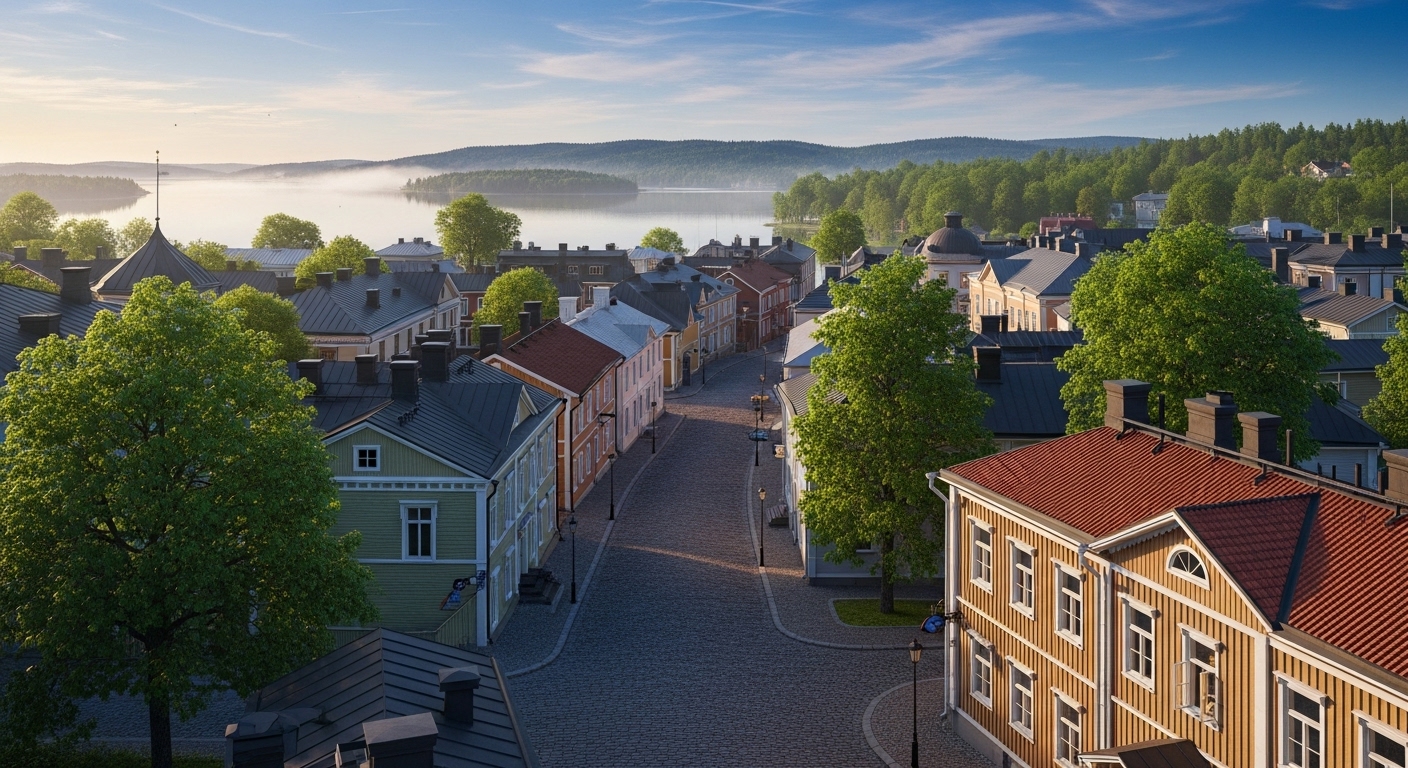
The B2 Finnish Plateau Isn't a Wall, It's a Fog
You've done the hard work. You can read the news on Yle, understand the main points of a podcast, and navigate conversations without panicking. You've climbed the mountain of Finnish cases and lived to tell the tale. You are, by all measures, a solid B2-level speaker. Yet, something feels... off.
Your writing is grammatically correct, but when you read it back, it doesn't sound quite Finnish. Your sentences are functional, but they lack the natural flow and nuance you hear from native speakers. You suspect you're making mistakes, but they're so subtle you can't see them yourself. It's like trying to find a specific shade of grey in a thick fog.
This is the B2 paradox: you know enough to communicate, but not enough to self-correct the finer points. The errors you make now are not the glaring mistakes of a beginner, but the fossilized habits of an intermediate learner. They're the small things that separate 'correct' Finnish from natural Finnish.
What if you could turn on a floodlight and clear that fog instantly? What if you could pinpoint that critical 5% of errors and systematically eliminate them? You can. The solution isn't about learning hundreds of new words; it's about building a powerful feedback loop that refines what you already know.
The Anatomy of 'Almost Correct' Finnish
Before we fix the problem, let's diagnose it. The errors that hold B2 learners back usually fall into a few key categories. They're not about getting the partitive case wrong on a basic level; they're more sophisticated.
1. Unnatural Collocations (Word Friends)
In every language, some words just love to hang out together. These are called collocations. Using the wrong word partner is a dead giveaway that you're thinking in another language and translating.
You might write:
Otan valokuvan.(I take a picture.) - This is a direct translation from English. It's understandable, but a Finn would almost always say:A native would say:
Otan kuvan.(I take a picture/image.)You might write:
Teen päätöksen.(I make a decision.) - Again, grammatically perfect, andtehdämeans 'to do/make'. But the more established collocation is:A native would say:
Teen päätöksen.is actually common, but a very common alternative isPääsen päätökseen(I arrive at a decision).You might write:
Sano vitsi.(Say a joke.)A native would say:
Kerro vitsi.(Tell a joke.)
These small choices make a huge difference in how natural your Finnish sounds.
2. Incorrect Verb Rektio (The Verb's Demands)
This is a classic. You know the verb, but you forget which grammatical case it demands its object to be in. Flashcards rarely teach this effectively because it requires sentence-level context.
You know
pitäämeans 'to like'. You might write:Minä pidän sinut.(I like you - using the accusative case).But
pitäädemands the elative case (-sta/-stä). The correct sentence is:Minä pidän sinusta.You know
rakastuameans 'to fall in love with'. You might write:Hän rakastui hänet.(He fell in love with her - using the accusative case).But
rakastuademands the illative case (-Vn). The correct sentence is:Hän rakastui häneen.
These are the kinds of errors that grammar checkers often miss, but native speakers spot instantly.
3. Lack of Expressive Vocabulary
At B2, you have a functional vocabulary. You can describe things. But do you have a vivid one? Often, learners default to the first word they ever learned for a concept.
Instead of just hyvä (good), you could use:
Erinomainen(excellent)Loistava(brilliant, splendid)Mainio(great, splendid)Kelvollinen(decent, acceptable)
Instead of just kävellä (to walk), you could use:
Lökötellä(to stroll, saunter)Hölkätä(to jog)Astella(to tread, step with purpose)Samoilla(to wander, roam, especially in nature)
Choosing the right word doesn't just change the meaning slightly; it paints a completely different picture.
The 3-Step Cycle for Developing Kielitaju (Language Intuition)
How do you go from consciously thinking about these rules to just knowing them? You need to build kielitaju - an innate sense of what sounds right. This doesn't come from magic; it comes from a disciplined, repeatable cycle.
Step 1: Deliberate Consumption 📚
Stop just reading for pleasure or for the gist. Start reading like a detective. Find a short, modern Finnish text - a blog post, a news article, a short story - that is at or slightly above your level.
As you read, your mission is to hunt for the patterns we just discussed:
- Collocations: When you see a verb-noun pair, ask yourself: 'Is this how I would have said it?' Highlight it.
Hakea lapsi päiväkodista(to pick up the child from kindergarten). Note that they usehakea, notnoutaaor something else. - Verb Rektio: Pay close attention to the cases that follow verbs. When you see
nauttia jostakin, internalize thatnauttia(to enjoy) takes the elative case. - Vivid Words: When you see a powerful adjective or a specific verb, ask yourself why the author chose it. What feeling does
upea(magnificent) convey thathieno(fine) doesn't?
This active, analytical reading primes your brain to recognize natural Finnish patterns.
Step 2: Active Production ✍️
This is where the learning gets locked in. After you've read and analyzed your text, put it away. Now, from memory, try to do one of two things:
- Summarize the text: Write a few sentences capturing the main idea of what you just read.
- Retell the story: In your own words, write out the story or argument from the text.
This step is crucial. It forces you to move from passive recognition to active recall. You have to pull that new vocabulary and those grammatical structures from your brain and actually use them. Your brain will try to default to its old, comfortable (and possibly wrong) patterns. Your job is to consciously try to use the new, more natural patterns you just observed.
Step 3: Granular Correction & Feedback 🔍
This is the most important—and most difficult—step to perform on your own. You've written your summary. Now what? How do you know if you successfully used the new patterns or just reverted to your old habits? How do you find the 5% of errors?
The Hard Way (Manual Methods):
- Side-by-Side Comparison: Pull up the original text next to your version. Read them line by line. Did you use the same verb? The same case? This is slow and tedious, but it works.
- Targeted Research: Did you use a verb you were unsure about? Look it up in a good dictionary like Kielitoimiston sanakirja to check its rektio.
- Find a Native: The gold standard is to have a native speaker or patient teacher review your text. They can provide nuanced feedback. The problem? Access is limited, and you can't bother them 24/7.
This cycle of Consume -> Produce -> Correct is the engine of language acquisition. The faster and more accurately you can spin this cycle, the faster you will improve. The biggest bottleneck for self-learners is always Step 3.
Supercharge Your Feedback Loop: From Hours to Seconds
Performing the correction step manually is slow, frustrating, and often incomplete. You might find some mistakes, but miss others. What if you could automate it? What if you had a Finnish expert on call, ready to give you instant, detailed feedback any time you wrote something?
This is precisely why we designed the learning cycle in the Toritark app. It takes the proven three-step method and puts it on steroids.
Here’s how it maps directly to the process:
1. Deliberate Consumption, Perfected: Instead of hunting for texts, you simply pick a topic you're interested in ('A conversation at a cafe', 'Planning a weekend trip'). With one tap, Toritark’s AI generates a unique, level-appropriate story just for you. This is your perfect 'deliberate consumption' material. As you read, you can long-press any word or sentence to see a translation or save new vocabulary, creating a personalized word list based on what you actually need to learn.
2. Active Production, Guided: Immediately after you finish reading, the app prompts you with its most powerful feature: Story Retelling. It explicitly asks you to retell the story in your own words. This isn't an afterthought; it’s the core of the learning experience, guiding you to complete Step 2 of the cycle when the information is freshest in your mind.
3. Granular Correction, Instantly: This is where the magic happens. The moment you submit your text, Toritark’s AI provides an incredible, multi-layered analysis that does the work of a personal tutor:
- Detailed Score Breakdown: You get an overall score and individual scores for Completeness, Grammar, Vocabulary, Spelling, and Punctuation. You see exactly where you're strong and where you need work.
- Side-by-Side Comparison: It shows your text next to a corrected version, highlighting every single change. You'll immediately see where you wrote
sanoa vitsiand it was corrected tokertoa vitsi. - Actionable Explanations: This is the game-changer. For each correction, it explains why it was a mistake, in your native language. It might say, "The verb 'pitää' requires the elative case (-sta/-stä) when expressing 'to like'. You used the accusative case." Or, "The word 'talo' (house) is grammatically correct, but the original story used 'mökki' (cottage), which fits the context of a summer trip better."
This isn't just a grammar checker; it's a comprehensive writing coach. It clears the fog around that critical 5% of errors, turning them into clear, understandable learning opportunities.
To complete the cycle, Toritark then takes the words you struggled with and creates fill-in-the-blank exercises using the original sentences from the stories. This ensures you master the vocabulary and grammar in context, solidifying your hard-won kielitaju.
Stop guessing if your Finnish is natural. Stop wondering what mistakes you're making. It's time to trade the fog for clarity and start a feedback loop that works. Your journey to truly fluent, natural Finnish writing starts today.
Finally, Speak with Confidence
📖 Read short stories adapted to your level.
✍️ Retell them & get instant AI corrections on your writing.
🧠 Master new words in their real context.
Similar posts

Your Finnish Is a Rehearsal. Here's How to Put on a Show.
Stuck at the B2 level in Finnish? You can read and listen, but writing feels clumsy. Discover the shift from passive consumer to active creator and turn your knowledge into fluent performance.

The Ghost in the Machine: Why Your 'Correct' Ukrainian Sentences Still Sound Wrong
You've mastered the cases and verbs, but your Ukrainian still feels... off. Discover the invisible errors holding you back and the feedback loop that finally makes you sound like a native.

From Functional to Fluent: 4 Secrets to Elevate Your Portuguese Writing Beyond the B2 Level
Feeling stuck at B2 Portuguese? Your writing is correct but lacks flair. Learn 4 actionable techniques to add sophistication and fluency, and discover the tool that gives you instant feedback.

Your Lithuanian Is Correct, But Does It Flow? A B2 Guide to Sophisticated Writing
Move beyond basic sentences and simple conjunctions. This guide reveals the Lithuanian grammatical tools—like participles and gerunds—that will make your writing sound natural and sophisticated.

Your Passive Luxembourgish Vocabulary Is Huge. Here's How to Actually Use It.
Stop feeling like you know thousands of Luxembourgish words but can only use a hundred. Learn the method to activate your passive vocabulary and write with confidence.