Your Czech Is Black and White. Here’s How to Start Painting with Words.
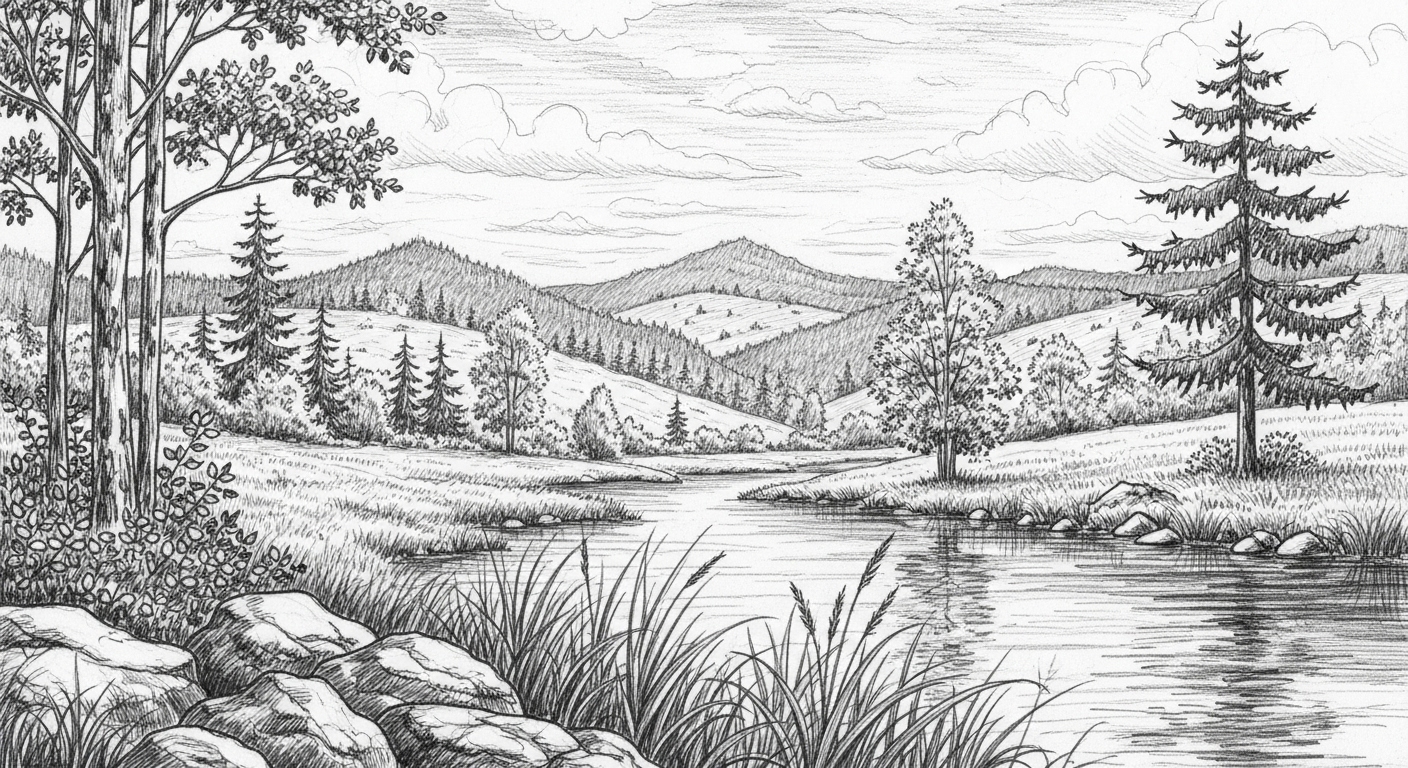
You’ve reached an exciting point in your Czech journey. You can form sentences. You can state facts. You can say, Muž pije kávu v kavárně. (A man drinks coffee in a cafe). Congratulations! That’s a huge achievement. 🥳
But you might feel a small, nagging gap between the Czech you can write and the way you think. In your mind, you don’t just see a man with a coffee. You see an old man, drinking strong, black coffee in a cozy, quiet cafe. You can almost smell the roasted beans and hear the soft clink of his spoon against the porcelain cup.
How do you bridge that gap? How do you go from stating facts to painting pictures with your words?
This is the difference between writing in black and white and writing in full, vibrant color. It’s the skill that makes your writing interesting, engaging, and-most importantly-more like a native speaker’s.
This guide is your first set of paints and brushes. We’re going to cover three practical, actionable ways to add color, depth, and emotion to your Czech writing. This isn't about memorizing complex grammar rules; it's about learning to use the tools you already have in a more powerful way.
Part 1: Your First Paintbrush - The Power of Adjectives (Přídavná jména)
Adjectives are the easiest way to start adding detail. You’ve already learned how they have to agree in gender, number, and case with the noun they describe. That’s the technical part. Now, let’s focus on the artistic part.
Think of adjectives as the descriptive DNA of your sentence. They answer questions like: What kind? How many? What color? What does it feel like?
Let’s look at our simple sentence:
- Black & White:
Dům stojí na kopci.(A house stands on a hill.)
It’s correct. It’s a fact. But it’s lifeless. Now let’s add some simple adjectives:
- In Color:
Starý, kamenný dům stojí na zeleném kopci.(An old, stone house stands on a green hill.)
Instantly, an image appears in your mind. We’ve added just three words, but the sentence now has texture, color, and a sense of history. This is the power you wield with adjectives.
Your A2 Adjective Starter Pack
To get started, you don’t need a dictionary full of obscure words. You just need a handful of high-impact adjectives you can use in many situations. Here are a few to get you going:
For atmosphere:
útulný- cozy, snughlučný- noisy, loudtichý- quiet, silentmoderní- modernstaromódní- old-fashioned
For feelings & opinions:
zajímavý- interestingnudný- boringkrásný- beautifulošklivý- uglychutný- tastynechutný- disgusting
For physical description:
velký- bigmalý- smallvysoký- tall, highnízký- short, lowsvětlý- light (in color or brightness)tmavý- dark
Actionable Task: Look around the room you're in right now. Choose three objects. Describe each object using at least two new Czech adjectives from the list above. Write the full sentences down. For example: Sedím na pohodlné, staré židli. (I am sitting on a comfortable, old chair.)
Part 2: Adding Motion and Nuance - The Magic of Adverbs (Příslovce)
If adjectives paint the static objects in your scene, adverbs add the motion, emotion, and nuance. They tell you how an action is happening. They are the directors of your story, telling your verbs how to act.
Let's take a simple action:
- Black & White:
Žena mluví.(A woman speaks.)
What kind of conversation is this? We have no idea. Now, let’s add an adverb:
- In Color:
Žena mluví potichu.(A woman speaks quietly.)
Suddenly, there’s a story. Is she sharing a secret? Is she in a library? The single word potichu adds a layer of intrigue.
Let's change the adverb:
- Different Color:
Žena mluví rychle.(A woman speaks quickly.)
Now it's a completely different scene. Is she excited? Nervous? Angry? Adverbs are incredibly efficient tools for adding psychological depth.
Your A2 Adverb Starter Pack
Many adverbs are formed from adjectives, often ending in -e or -ě. For example, rychlý (fast/adjective) becomes rychle (fast/adverb).
Here are some essential adverbs to add to your toolbox:
pomalu- slowlyrychle- quicklyopatrně- carefullynahlas- loudlypotichu- quietlydobře- wellšpatně- badlysmutně- sadlyvesele- cheerfullyvždy- alwaysnikdy- neverobvykle- usually
Actionable Task: Take the sentence Dítě se učí. (The child learns/studies.) Rewrite it three times, using three different adverbs from the list above to create three completely different mini-stories. For example: Dítě se učí pomalu. vs. Dítě se učí vesele.
Part 3: Choosing a Better Verb (Sloveso)
This is a more advanced technique, but it has a huge impact. Sometimes, the most powerful way to add description isn’t to add more words, but to choose a better, more precise core word.
In English, we do this all the time. Instead of saying “He walked,” we might say he “strolled,” “sprinted,” “trudged,” or “shuffled.” Each verb contains a description within it.
Czech is the same. Your default verb might be jít (to go, to walk). It’s functional, but it’s black and white.
- Black & White:
Muž jde po ulici.(A man goes/walks down the street.)
Now, let's swap jít for something more descriptive:
- In Color:
Muž spěchá po ulici.(A man hurries down the street.) - We feel his urgency. - In Color:
Muž se plouží po ulici.(A man shuffles/trudges down the street.) - We feel his exhaustion or sadness. - In Color:
Muž kráčí po ulici.(A man strides down the street.) - We feel his confidence.
Upgrading your verbs is one of the fastest ways to make your writing more dynamic and engaging.
Your First Verb Upgrades
Start by noticing the common, simple verbs you use all the time and look for more vivid alternatives.
- Instead of
dívat se(to look), try:zírat- to starepozorovat- to observe
- Instead of
říct(to say), try:křičet- to shoutšeptat- to whisper
- Instead of
vzít(to take), try:popadnout- to grabzvednout- to lift, to pick up
This takes time, but every new verb you learn is like adding a brand new, vibrant color to your painter's palette.
The Problem with Practice: Writing into a Void
Okay, you have the blueprint. 🎨 You know you need to use more descriptive adjectives, add adverbs for nuance, and choose stronger verbs. You've even done the mini-tasks in this article.
But now what?
You can sit down with a notebook and try to write a story about starý muž, who pomalu pije his coffee. You can describe the útulná kavárna. But a crucial question will loom over you:
Is this correct?
Did I use the right case for útulná? Is pomalu the most natural-sounding adverb here? Does my sentence even make sense?
This is the feedback gap. Without feedback, practice can feel like shouting into the wind. You don't know if your mistakes are becoming habits. Hiring a tutor for daily feedback is expensive and impractical. So, how do you get the consistent practice and correction you need to truly master descriptive writing?
An Accelerator for Your Writing: Practice with a Purpose
This is where technology can be a game-changer. Imagine a system designed specifically to close this feedback loop. This is exactly what we built at Toritark.
Here’s how it helps you practice the exact skills we've discussed:
1. Endless, Colorful Reading Material: Instead of you having to invent a story, Toritark’s AI generates a unique, short story for you based on a topic you choose (like “a walk in the park” or “a family dinner”). These stories are filled with the exact kind of descriptive language you want to learn, all perfectly tailored to your A2/B1 level. You get to see how adjectives, adverbs, and strong verbs are used naturally.
2. The Active Writing Challenge: This is the most important step. After you read the story, the app prompts you: “Now, retell this story in your own words.” This is your playground! You can try to use the new adjectives you learned. You can experiment with changing jít to spěchat. You’re not just consuming; you’re actively creating.
3. Instant, Granular Feedback (Your 24/7 Tutor): Here’s the magic. As soon as you submit your story, our AI analyzes it and gives you incredible feedback. It doesn’t just say “good” or “bad.” It gives you:
- An overall score on your writing.
- A breakdown of your performance in Grammar, Vocabulary, Spelling, and Completeness.
- A side-by-side view of your text and the corrected version, with every single change highlighted.
Most importantly, it explains why something was an error. It might tell you: “The adjective ‘útulný’ needs to be in the accusative case here, so it should be ‘útulný’ -> ‘útulnou’.” Or, “The verb ‘jít’ is correct, but the original story used ‘kráčet’ (to stride), which is more descriptive in this context.”
This feedback loop-Read, Write, Get Instant Correction-is the fastest way to turn the knowledge from this article into a real, instinctive skill.
4. Master Vocabulary in Context: When you encounter a great new descriptive word like opuštěný (abandoned) in a story, you can save it. Later, Toritark quizzes you on that word using the exact sentence you found it in. This burns the word and its context into your memory far more effectively than a random flashcard.
Start Painting Today
Moving from black-and-white sentences to colorful, descriptive writing is a major step toward fluency in Czech. It’s how you start to express your unique personality and perspective in your new language.
The method is simple:
- Use descriptive adjectives.
- Add nuance with adverbs.
- Choose stronger, more vivid verbs.
You have the concepts. The key now is consistent practice with reliable feedback.
Whether you use a pen and paper, find a language partner, or use a tool like Toritark to accelerate your progress, the most important thing you can do is start writing today. Take your simple sentences and begin to add a splash of color. You’ll be amazed at the worlds you can create. Happy writing! ✍️
Finally, Speak with Confidence
📖 Read short stories adapted to your level.
✍️ Retell them & get instant AI corrections on your writing.
🧠 Master new words in their real context.
Similar posts

Your Czech Writing Sounds Like a Police Report. Here’s How to Tell a Story.
Stuck writing flat, factual Czech sentences? This guide shows you how to add flow, description, and emotion to transform your writing from a simple report into a captivating story.
From Words to Sentences: A Beginner's Guide to Writing Your First Lines in Czech
Know some Czech words but can't connect them? This guide breaks down sentence structure, verb aspect, and cases into simple steps to help you start writing today.
Your Czech Sentences Have the Right Words, But the Wrong Music
You've mastered Czech cases, but your sentences still sound... off. Discover the secret to natural Czech: word order. It's not random, it's the rhythm of the language that separates learners from natives.
Your Czech Sentences State Facts. Here's How to Add Emotion with Word Order.
Stuck writing robotic Czech sentences? Learn the secret of native-like word order to add emphasis and emotion, and discover the tools to practice it effectively.
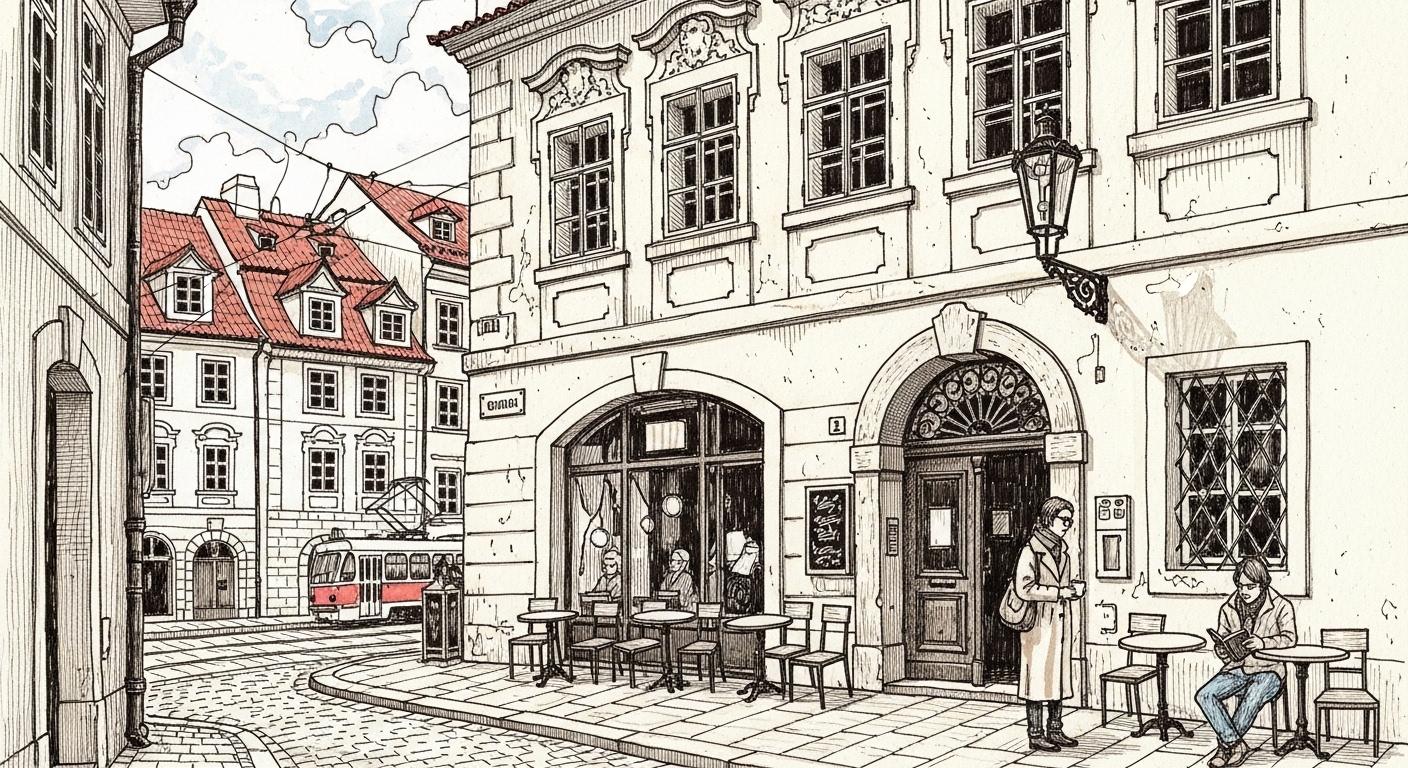
From 'A Man Walks' to a Full Scene: The B1 Czech Guide to Descriptive Writing
Tired of Czech sentences that just state facts? Learn the simple framework for adding adjectives and adverbs to turn your writing from a simple report into a vivid story.