The Polish 'Grammar Zombie' Problem: Why Your Writing Feels Lifeless (And How to Fix It)
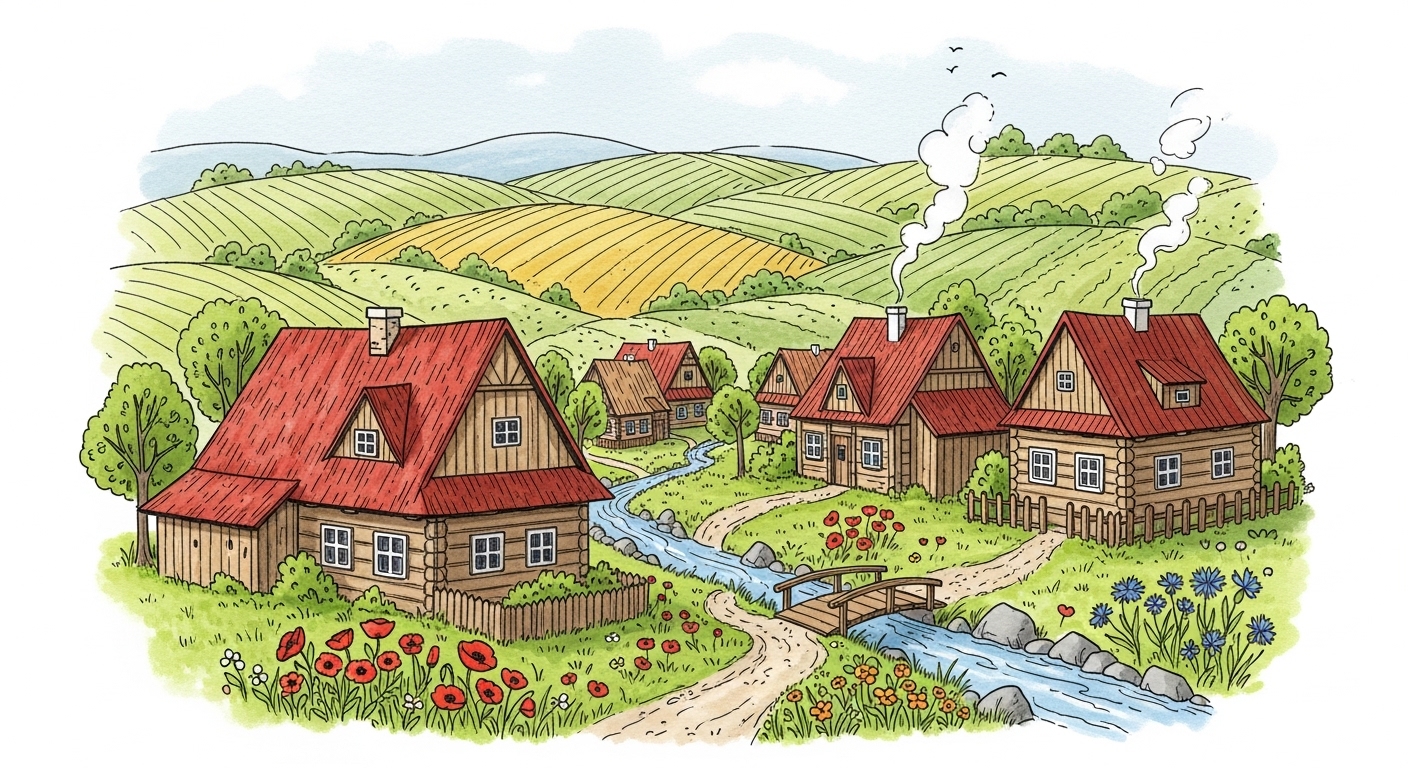
The Feeling: You're a Polish Grammar Zombie 🧟
Let's be honest. You've put in the hours. You’ve dutifully studied the seven Polish cases (przypadki), memorizing the endless charts of endings for nouns, adjectives, and pronouns. You know the difference between the nominative (mianownik) and the accusative (biernik). You've wrestled with verb conjugations (koniugacje) and the mysterious concept of aspect (aspekt czasownika). You could probably ace a multiple-choice grammar test.
So why, when you sit down to write a simple email to a Polish friend or try to describe your weekend, does it all fall apart?
Your sentences come out stiff and robotic. You use the same simple structures over and over: To jest dom. Lubię kawę. Wczoraj byłem w pracy. It feels like you're assembling a piece of IKEA furniture with a dictionary as your only tool. Each sentence is a separate, awkward block, technically correct but utterly devoid of life, flow, or personality.
If this sounds familiar, you're not alone. You're experiencing the B1 plateau, but in a very specific way. You’ve become a Polish Grammar Zombie. Your knowledge is there, shuffling around in your brain, but it’s not alive. It moves, but it has no soul.
The good news? There's a cure. It’s not another grammar chart or a new set of flashcards. It’s a fundamental shift in how you practice - a method designed to breathe life back into your Polish and transform your lifeless rules into living, breathing language. In this guide, we'll diagnose the problem and give you a powerful 3-step cycle to revive your writing for good.
The Diagnosis: Why Your Knowledge Isn't Turning into Skill
Before we get to the cure, we need to understand the disease. Why does this zombie-like state happen? It's not because you're bad at languages. It's because the way you've been learning has created a huge gap between what you recognize and what you can produce. There are three main culprits.
Culprit #1: The Chasm Between Knowledge and Skill
Knowing that the instrumental case (narzędnik) is used after the preposition z (with) is knowledge.
Effortlessly writing Idę do parku z moim wesołym psem (I'm going to the park with my happy dog), with the correct -ym endings on both the pronoun and the adjective without even thinking about it, is skill.
Most traditional learning methods - grammar drills, flashcards, textbook exercises - are excellent for building knowledge. They fill your head with rules and patterns. But they do very little to build skill. Skill is knowledge in motion. It's the ability to access the right rule at the right time, instantly and intuitively, to express a unique thought. Your brain has filed away the rules in a dusty cabinet labeled 'Polish Grammar', but it hasn't built the high-speed pathways to retrieve and use them in a real conversation or piece of writing.
Culprit #2: The Poison of Context-Free Learning
Imagine learning the word klucz (key). You put 'klucz' on one side of a flashcard and 'key' on the other. You memorize it. Congratulations, you 'know' the word.
But what have you really learned? Almost nothing about how to use it.
Your brain hasn't seen it in its natural habitat. It doesn't know that you szukać klucza (look for the key - genitive), that you otwierać drzwi kluczem (open the door with the key - instrumental), or that you can talk about klucz do sukcesu (the key to success - metaphorical use).
When you learn words and grammar rules in isolation, you're giving your brain disconnected data points. It's like trying to understand a city by looking at a list of street names instead of a map. The real meaning, the relationship between the pieces, is lost. Rich context is the glue that makes language stick. Without it, your vocabulary is just a pile of bricks, not a house.
Culprit #3: The Paralysis of Production
This is the biggest factor of all. Most learners spend 95% of their time on input (reading and listening) and only 5% on output (writing and speaking). It's easy to see why. Input is comfortable. It's safe. You can read an article or listen to a podcast, and even if you only understand 70%, you feel like you're making progress.
Output is terrifying.
When you write or speak, you are forced to confront the gaps in your knowledge. You have to actively retrieve words, apply grammar rules, and structure your thoughts. You will make mistakes. You will feel slow and clumsy. This discomfort is so profound that many learners simply avoid it, staying in their passive consumption bubble forever.
But here's the hard truth: No amount of input alone will make you a fluent writer or speaker. You cannot learn to swim by watching videos of swimming. You have to get in the water. Output is where the real learning happens. It’s the process of trying, failing, and adjusting that forges raw knowledge into practical skill.
The Cure: The 3-Step 'Revival' Cycle
Okay, diagnosis over. It's time to bring your Polish back to life. This 3-step cycle is designed to bridge the gap between input and output, forcing your brain to start using the grammar and vocabulary it already knows. Do this consistently, and the zombie-like feeling will begin to fade, replaced by confidence and fluency.
Step 1: Immerse in Comprehensible, Engaging Stories
Forget dry textbook dialogues about Piotr and Ewa going to the post office. Your first task is to find short pieces of Polish text that you are genuinely interested in. This is non-negotiable. If you're bored, your brain switches off.
What to look for:
- Topics you love: Are you into technology? Find a short blog post about new phones. Love cooking? Find a simple recipe for
pierogi. Passionate about history? Read a short biography of a Polish king. - The right level: The text should be 'comprehensible input'. This means you should be able to understand the gist of it without looking up every single word. A good rule of thumb is that you should recognize around 80-90% of the words.
- Narrative is key: Stories are best. Our brains are wired for narrative. A text with a beginning, a middle, and an end - even a very simple one - is far more memorable than a list of facts. Look for short stories for learners, descriptions of a daily routine, or a simple news summary.
The goal here isn't to dissect every sentence. It's to absorb the flow, the rhythm, and the context of the language. Let it wash over you. This is the raw material, the 'breath of life' for your writing.
Step 2: Reconstruct, Don't Just Recite (The Hard Part)
This is the heart of the cure. This is where you actively fight the zombie-ism.
After you've read your chosen text once or twice, put it away. Don't look at it again. Now, open a blank document or grab a piece of paper and try to retell the story in your own words.
This is NOT a memory test. The goal isn't to reproduce the original text perfectly. The goal is to express the same ideas using the Polish that you have available in your brain.
Let’s walk through an example. Suppose you read this short text:
Original Text:
Marek wstał wcześnie rano, ponieważ miał ważny egzamin. Wypił szybko kawę i zjadł małe śniadanie. Chociaż był zdenerwowany, czuł się przygotowany. Wyszedł z domu i poszedł na przystanek autobusowy.(Marek got up early in the morning because he had an important exam. He quickly drank a coffee and ate a small breakfast. Although he was nervous, he felt prepared. He left the house and went to the bus stop.)
Now, you put it away. You take a deep breath. You start to write. Your version might look something like this:
Your Retelling:
Dziś rano Marek miał egzamin. On wstał wcześnie. On pił kawę i jadł śniadanie. Marek był trochę nerwowy, ale uczył się dużo. Potem on poszedł na autobus.(This morning Marek had an exam. He got up early. He drank coffee and ate breakfast. Marek was a little nervous, but he studied a lot. Then he went for the bus.)
Look at what you just did. Your version isn't as elegant as the original, but you successfully communicated the entire story. You were forced to:
- Recall vocabulary:
egzamin,wcześnie,kawa,nerwowy. - Apply grammar: You correctly used past tense verbs (
miał,wstał,pił,jadł). - Construct sentences: You built your own valid Polish sentences from scratch.
This single act of reconstruction does more for your active skills than ten hours of passive reading. You are literally forging the neural pathways between knowing and doing. It will feel difficult and slow at first. That feeling is the feeling of growth.
Step 3: Seek Immediate, Granular Feedback
A cycle is only a cycle if it closes. Practicing without feedback is like bowling in the dark. You might be getting better, but you have no idea what you're hitting.
After you've done your reconstruction, you need to find out what you did right and what you did wrong. This is crucial for refining your internal grammar model.
How to get feedback:
- Good: Post your text on a forum like Reddit's r/learnpolish and ask for corrections.
- Better: Get a tutor or a patient language exchange partner to review your text with you.
- Best: Get feedback that is immediate, specific, and explains the 'why' behind your mistakes.
Don't just look at the corrections. Understand them. Did you use the wrong case? Note it down. Did you pick a word that doesn't quite fit the context? Try to understand the nuance. This targeted analysis of your own mistakes is the most valuable data you can get. It shows you exactly where your 'Grammar Zombie' is weakest, so you know what to focus on next.
The Accelerator: Stop the Manual Labor, Automate the Cycle
This 3-step cycle of Immerse -> Reconstruct -> Get Feedback is undeniably powerful. It's the blueprint for reviving your Polish writing skills.
But let's be realistic. It's also a lot of work.
Finding new, interesting, level-appropriate texts every day is a chore. The mental energy required to force yourself to do the reconstruction step is significant. And finding a reliable source for immediate, detailed feedback can be difficult and expensive.
This is the precise set of challenges we designed Toritark to solve. We looked at this proven learning cycle and built a tool to automate the friction and amplify the results.
Toritark isn't a replacement for the method; it's the ultimate accelerator for it.
Here’s how it maps directly to the cure:
Problem: Finding endless engaging stories (Step 1).
- Toritark's Solution: With a single tap, our AI generates a brand-new, unique story in Polish tailored to your B1 level on any topic you can imagine. Want a story about a dragon cooking
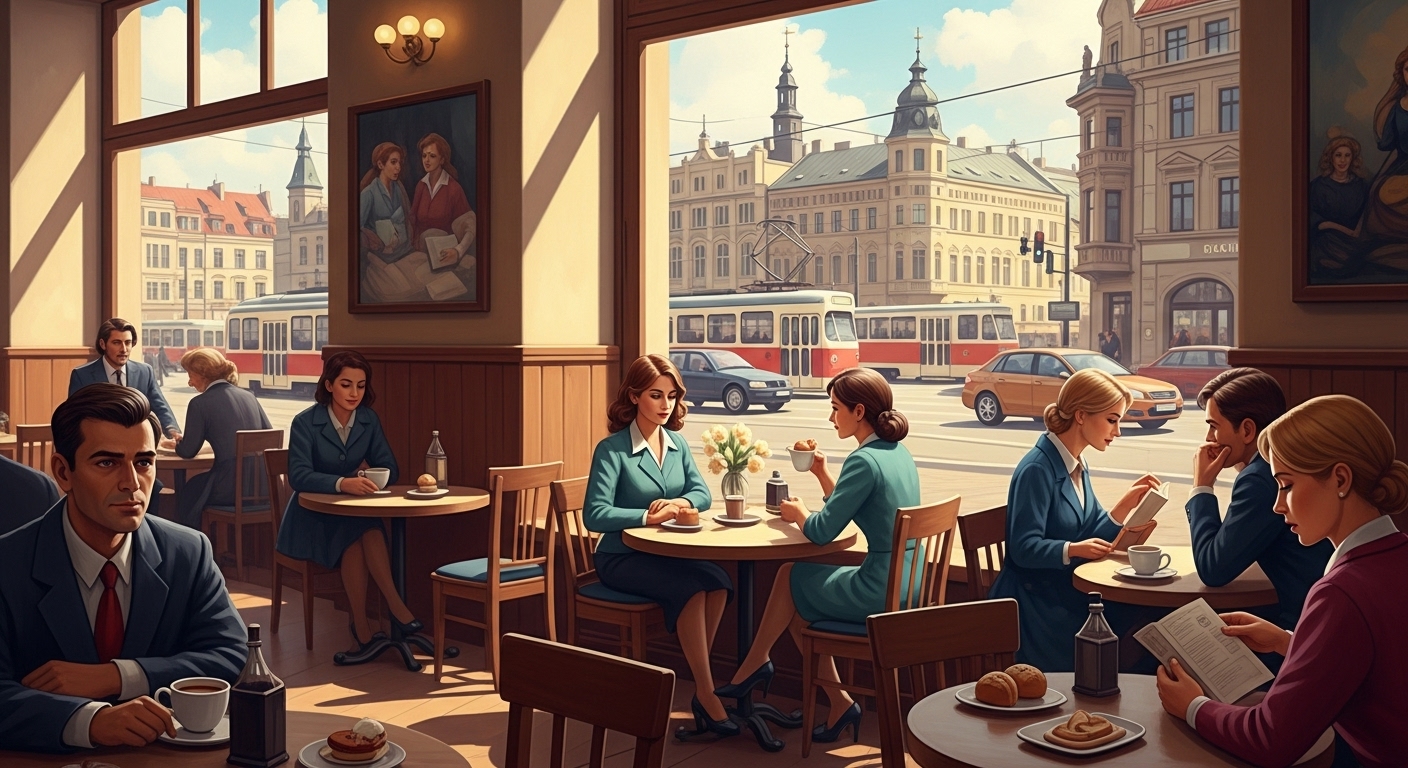
żurek? Or a dialogue in a Warsaw coffee shop? You get an infinite supply of personalized, engaging content. No more hunting for texts. Long-press any sentence for an instant translation so you never lose your flow.
- Toritark's Solution: With a single tap, our AI generates a brand-new, unique story in Polish tailored to your B1 level on any topic you can imagine. Want a story about a dragon cooking
Problem: The friction of the reconstruction step (Step 2).
- Toritark's Solution: We've made this the core of our app. After you read your AI-generated story and answer a quick comprehension quiz, the app prompts you: "Now, retell the story in your own words." It guides you through the most important and most-avoided step in language learning, turning a chore into a core, rewarding part of the experience.
Problem: Getting instant, expert feedback (Step 3).
- Toritark's Solution: This is our magic. The moment you submit your retelling, our AI analyzes it and gives you feedback that's more detailed than most human tutors. You don't just get a grade. You get a side-by-side comparison of your text and a corrected version, with every grammar, spelling, and vocabulary mistake highlighted. Crucially, it explains why it was wrong, in clear English. It's like having a 24/7 Polish linguist who points out, "You used
zobaczyćhere, butobejrzećis better for watching a film," or "The noun 'egzamin' requires the genitive caseegzaminuafter the verbmiećin this negative construction."
- Toritark's Solution: This is our magic. The moment you submit your retelling, our AI analyzes it and gives you feedback that's more detailed than most human tutors. You don't just get a grade. You get a side-by-side comparison of your text and a corrected version, with every grammar, spelling, and vocabulary mistake highlighted. Crucially, it explains why it was wrong, in clear English. It's like having a 24/7 Polish linguist who points out, "You used
And to close the loop, every new word you save from a story is automatically added to a personalized quiz deck that uses fill-in-the-blank exercises from the original sentences. You practice vocabulary and grammar in the exact context you learned it, cementing it in your memory.
Conclusion: From Zombie to Storyteller
Your Polish doesn't have to feel like a collection of lifeless, disconnected rules. The knowledge you've worked so hard to acquire is not dead; it's just dormant. It's waiting for you to activate it through deliberate, challenging practice.
The path from 'Grammar Zombie' to fluent storyteller is clear: Immerse, Reconstruct, and Get Feedback.
This is the cycle that turns passive recognition into active skill. It builds the mental muscles you need to express your own thoughts with confidence and creativity. You now have the blueprint. You can follow it manually with dedication and discipline, and you will see results.
Or, if you want to make the process faster, more engaging, and incredibly efficient, you can use a tool built for this exact purpose. If you're ready to stop assembling sentences and start telling stories, give Toritark a try.
Start your first story today at https://toritark.com.
Finally, Speak with Confidence
📖 Read short stories adapted to your level.
✍️ Retell them & get instant AI corrections on your writing.
🧠 Master new words in their real context.
Similar posts
You Know Polish Words, But Can't Write Sentences? Try This 3-Step Cycle
Stuck with isolated Polish words? Learn a simple 3-step writing cycle to turn your vocabulary into actual stories and break through the A1 barrier for good.

Your Polish Vocabulary Is a Spectator Sport. Here’s How to Get on the Field.
You can read simple Polish texts, but writing feels impossible. Discover why your knowledge is passive and learn a powerful method to turn it into an active, usable skill.

From Polish Parrot to Poet: A B2 Learner's Guide to Creative Writing
Stuck imitating Polish sentences instead of creating your own? This guide offers a powerful 3-step method to break free and develop your unique, fluent writing style.

Your Polish is Correct, but is it *Soczysty*? A B2 Guide to Writing with Flavor
Stuck at the B2 level? Learn why your Polish writing feels bland and discover three actionable techniques to add the 'juicy' flavor of a native speaker.

Your Polish Has a One-Way Street Problem: How to Turn Passive Knowledge into Active Skill
Stuck at the B1 level in Polish? You can read, but can't write? Discover why your learning is a one-way street and learn a 4-step method to build the 'return lane' to active fluency.