The Italian Sentence Assembly Line: A Beginner's Guide to Building with Confidence
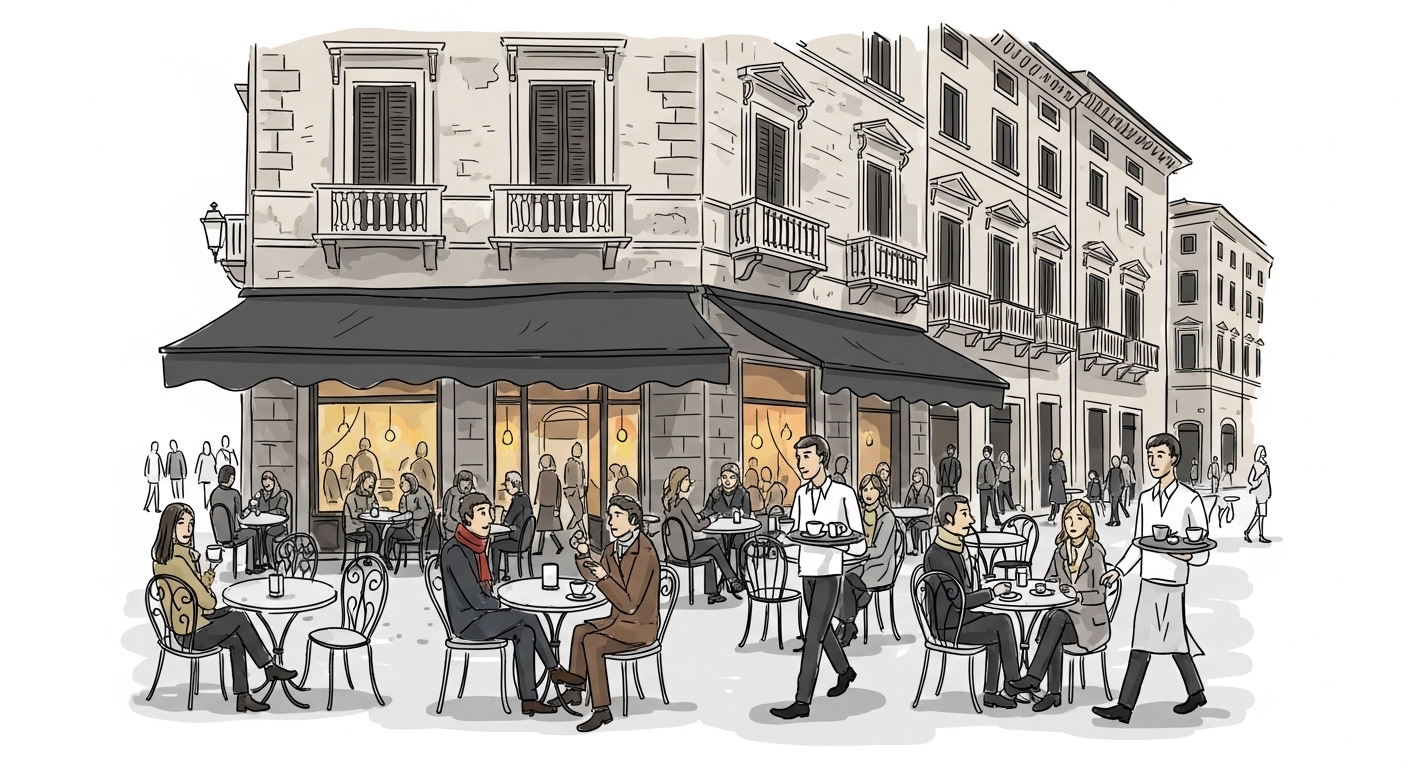
You're standing in a beautiful Italian piazza. ☀️ You want to describe it to a friend. Your brain quickly finds the words: piazza, grande, chiesa, vecchio, fontana, bello.
You have all the parts. They're right there. But when you open your mouth, what comes out? Maybe something like... "La piazza è... bello... con un vecchio chiesa." It feels clumsy. The flow isn't there. You know the words, but you feel like you're trying to assemble furniture with the instructions in the wrong language.
If this sounds familiar, you're not alone. This is one of the most common hurdles for A2 learners of Italian. You've successfully collected the vocabulary—the bricks and raw materials. But you haven't yet perfected the mental assembly line that puts them together into strong, beautiful structures.
Let's change that. In this guide, we're not just going to learn rules. We're going to build a system in your mind—an efficient assembly line—for constructing correct and natural-sounding Italian sentences.
Part 1: The Blueprint for Your Italian Assembly Line
Every good assembly line starts with a clear blueprint. In language, that blueprint is word order. While Italian can be flexible, there's a standard, reliable structure that will be correct 95% of the time for a beginner.
The Core Chassis: Subject-Verb-Object (SVO)
This is the foundation of your line. Most simple statements you want to make will follow this pattern:
- Subject (Who/What does the action):
Io(I),Maria,il gatto(the cat) - Verb (The action):
leggo(read),mangia(eats),è(is) - Object (What receives the action):
un libro(a book),la pasta,bello(beautiful)
Examples:
Io leggo un libro.(I read a book.)Maria mangia la pasta.(Maria eats the pasta.)Il gatto è nero.(The cat is black.)
This seems simple, but consciously thinking SUBJECT FIRST, VERB SECOND is a crucial first step to stop translating directly from your native language.
The First Upgrade: Adding Adjectives Correctly
Here's where the assembly line often breaks down for learners. In English, we say
Finally, Speak with Confidence
📖 Read short stories adapted to your level.
✍️ Retell them & get instant AI corrections on your writing.
🧠 Master new words in their real context.
Similar posts

Your Italian Is Black and White. Here’s How to Add Color with Adjectives & Adverbs
Tired of basic Italian sentences? Learn how to use adjectives and adverbs to make your language vivid and expressive. A practical guide for A2 learners.

You Know Armenian Words, But Can't Write a Sentence? Here's the Fix.
Feeling stuck at the A2 level in Armenian? Learn our 3-step 'Read, Recall, Recreate' method to bridge the gap between knowing words and writing your own stories.

The 3 Vocabulary Traps Snaring Portuguese Learners (And How to Escape Them)
Stuck learning Portuguese words but can't use them? Discover the three hidden traps holding you back and learn a powerful cycle to turn passive knowledge into active fluency.

Your Swedish Sentences Follow the Same Script. Here's How to Flip It.
Stuck in the 'Subject-Verb-Object' rut? Learn the art of 'fronting' to add emphasis and flow to your Swedish, and discover how to practice it with instant, AI-powered feedback.

Your Swedish Vocabulary Is in 'Read-Only' Mode. Here's How to Unlock Write Access.
Stuck at the A2 level in Swedish? You can read but can't write. This guide reveals why and offers a powerful cycle to activate the vocabulary you already know.